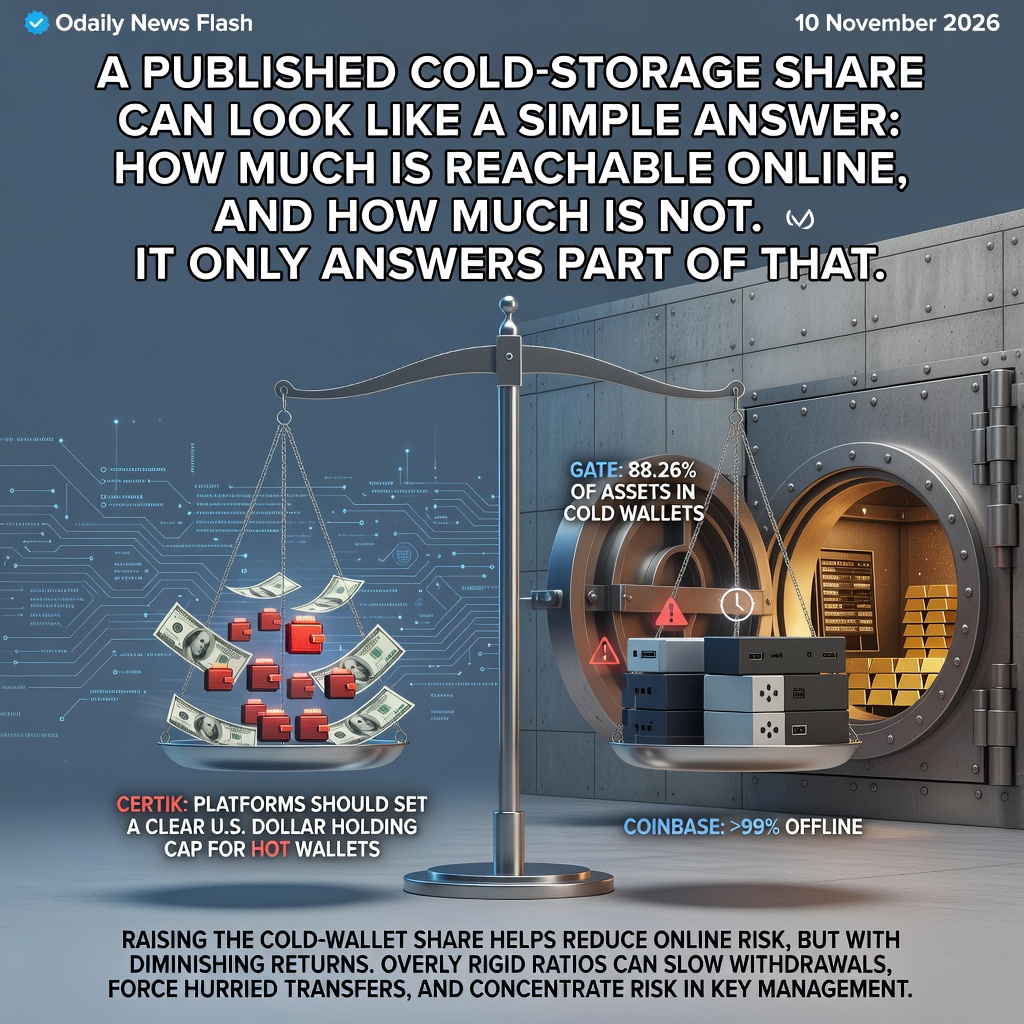
If you keep assets on an exchange, a published cold-storage share can look like a simple answer to a holding question: how much is reachable online, and how much is not. It only answers part of that.
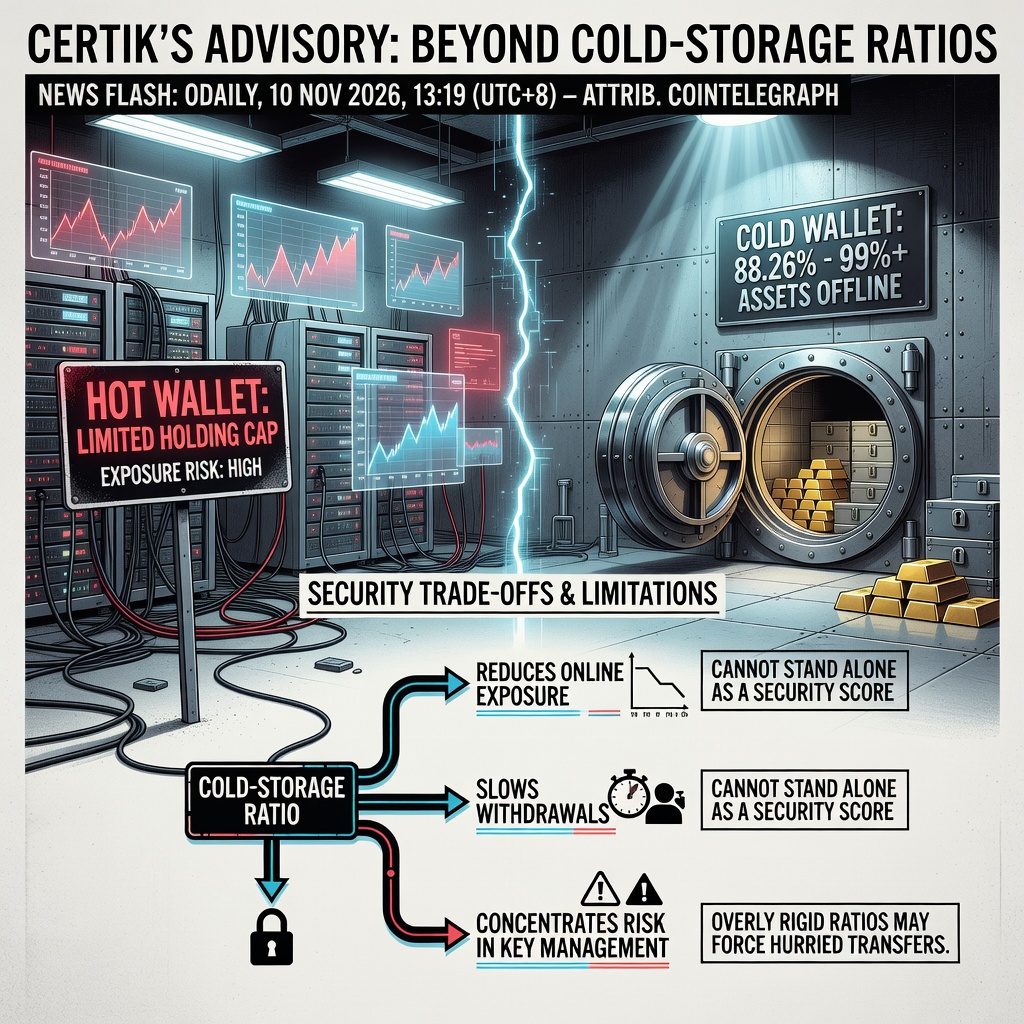
In a news flash published on 10 November 2026 at 13:19 (UTC+8), Odaily reported that CertiK’s research team said crypto trading platforms should not measure security by the cold-wallet asset share alone. Platforms should also set a clear U.S. dollar holding cap for hot wallets. The comment was made after a Binance hot-wallet attack, as several platforms disclosed cold-wallet reserve ratios to strengthen user confidence. Odaily attributed the report to Cointelegraph. The flash names the attack but does not give a confirmed or estimated loss.
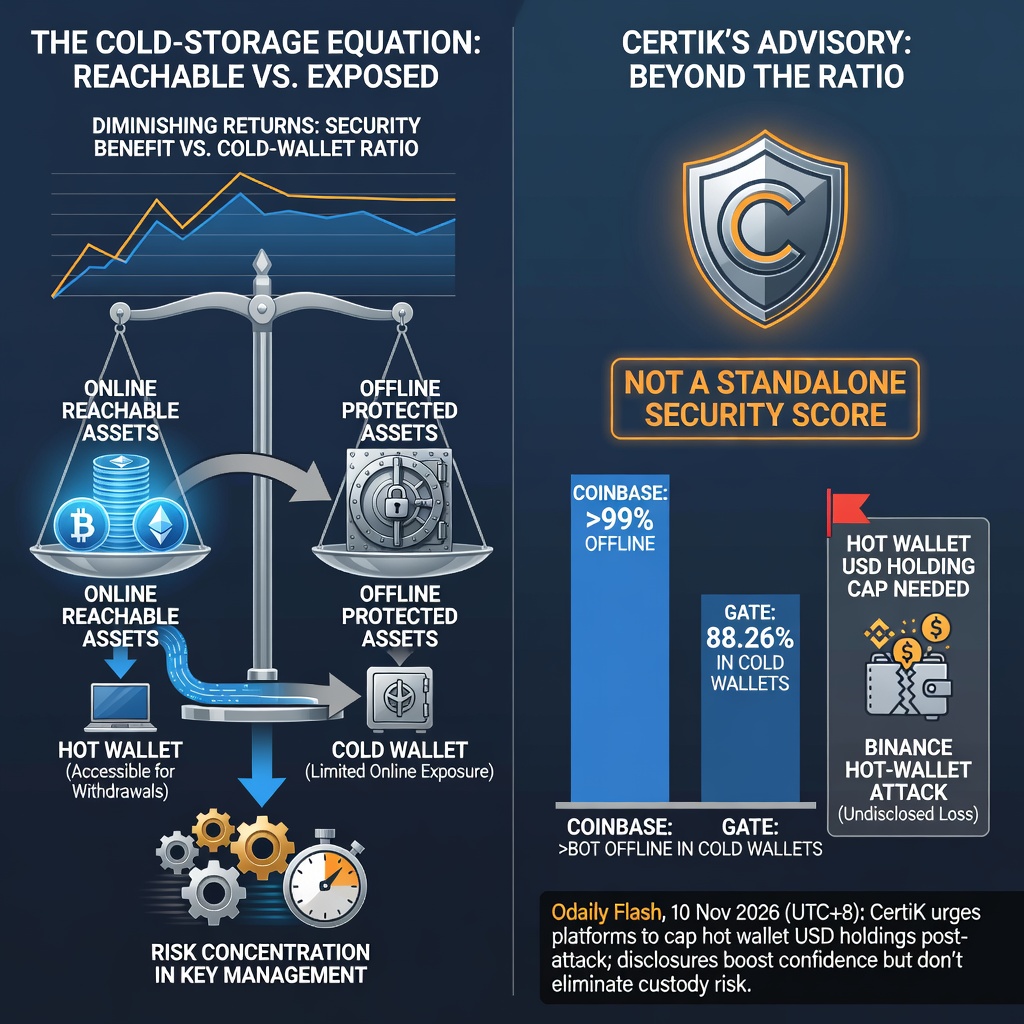
Gate disclosed that 88.26% of its total assets were stored in cold wallets. Coinbase said more than 99% of customer assets were offline.
CertiK’s research team said a cold-storage ratio can reflect how much of the assets are exposed online, but it cannot stand alone as a security score. Raising the cold-wallet share usually helps reduce online risk. When the share is already high, further increases may bring limited benefit. An overly rigid ratio can also slow withdrawals, force hurried asset transfers, and concentrate risk in the key-management system.
For a holder, the reported trade-off is between keeping assets reachable for withdrawal and limiting online exposure. A higher cold-wallet share points to less online exposure, with diminishing returns once the ratio is already high. Treating that ratio as a fixed rule can slow withdrawals, push hurried transfers, and leave more of the remaining risk in key management. The disclosures are not described as removing custody risk.
Original article: Odaily news flash, 10 November 2026