
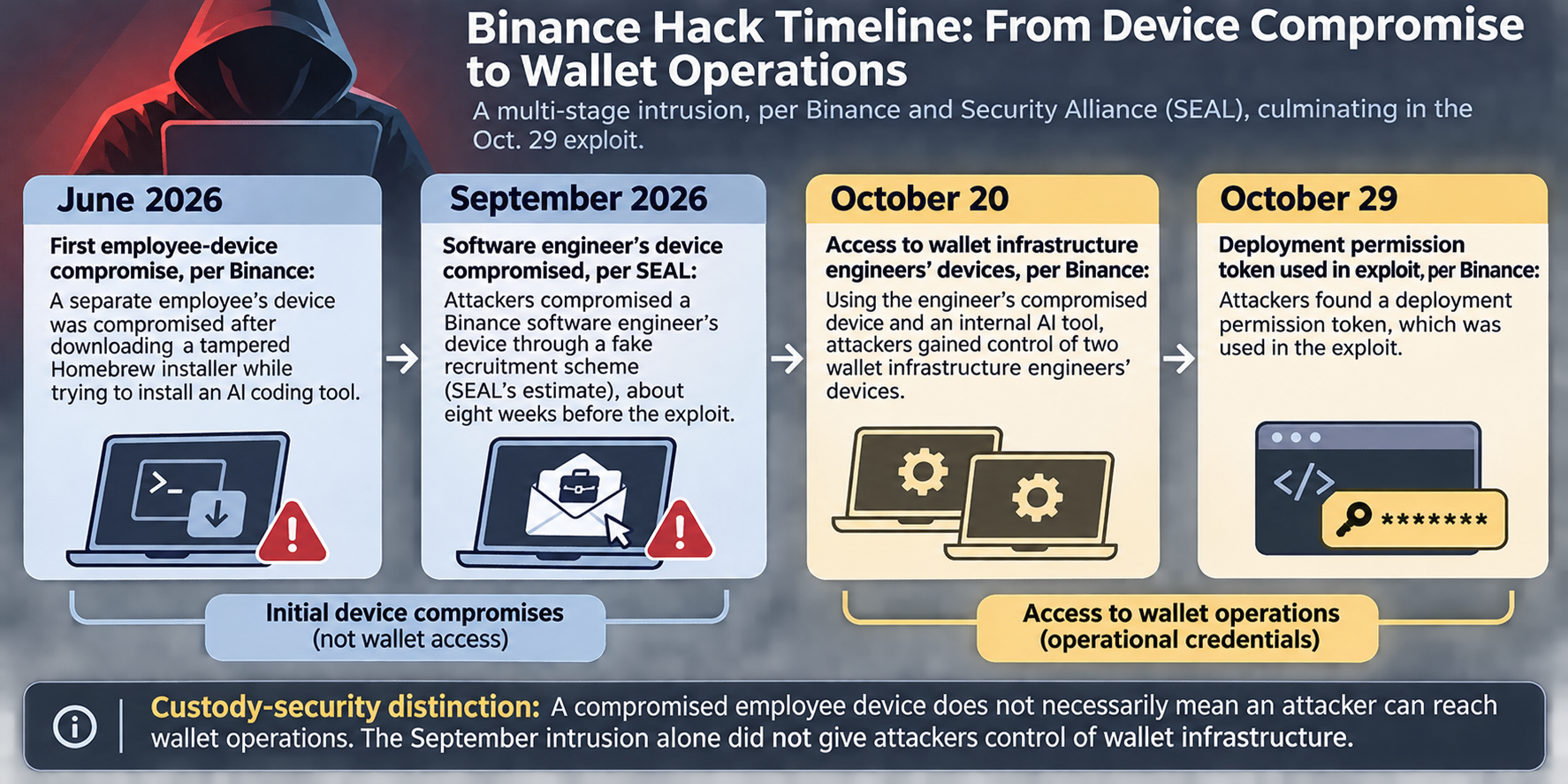
A compromised employee device does not necessarily mean an attacker can reach wallet operations. In reporting published on November 6, 2026, Security Alliance (SEAL) and Binance described the separate steps that preceded the October 29 Binance exploit, reported at $6.3 billion.
SEAL estimated that attackers compromised a Binance software engineer’s device through a fake recruitment scheme in September, roughly eight weeks before the exploit. That estimate describes the September-to-October intrusion window—not the start of the broader campaign, which Binance traced to June.
According to Binance, a different employee compromised a device in June by downloading a tampered Homebrew installer while trying to install an AI coding tool. Binance said it detected the incident, replaced the device and rotated related credentials, but the attackers had already obtained information about staff working on wallet infrastructure.
Binance said the attackers did not gain the access needed to reach wallet operations until October 20. Using the engineer’s compromised device and an internal AI tool, they gained control of two wallet infrastructure engineers’ devices, then found a deployment permission token used in the October 29 exploit.
SEAL linked the fake recruitment campaign to at least four front-company domains in 2026: citalab.net, citalab.com, bitfit.io and oddium.io. The FBI attributed the attack to North Korea’s TraderTraitor; Kim Yo Jong dismissed that accusation.
The custody-security distinction is between an initial device compromise and later access to operational credentials. This account does not establish that the September intrusion alone gave attackers control of wallet infrastructure.
Source: cointelegraph.com (originally published 2026-11-06 19:26 UTC+8)