
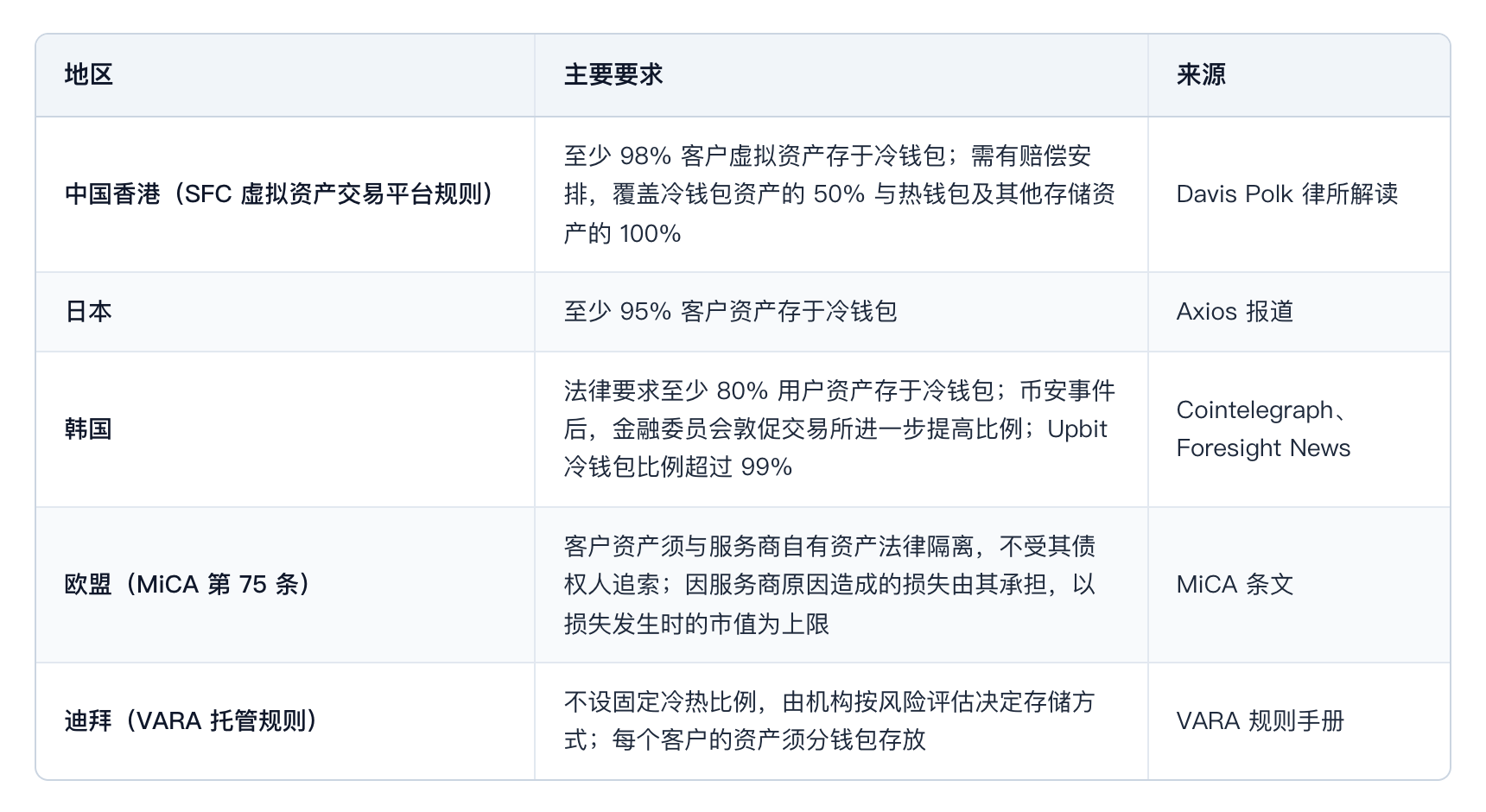
If an exchange pauses withdrawals, an institution can lose access to operating funds even if the platform later covers the theft. That distinction—between an eventual loss of principal and a temporary loss of access—is central to managing exchange exposure.
In research published on November 12, 2026, with information checked through November 9, BigTime examined reported thefts affecting Bitget, Binance and Mercado Bitcoin over the preceding six weeks. All three platforms said they would cover user losses. BigTime said there was no public report, as of its review, of institutions directly losing principal in those incidents. Those assurances were not all resolved: Mercado Bitcoin had not resumed withdrawals or announced a reopening time at the time of the report, so its commitment had yet to be fulfilled.
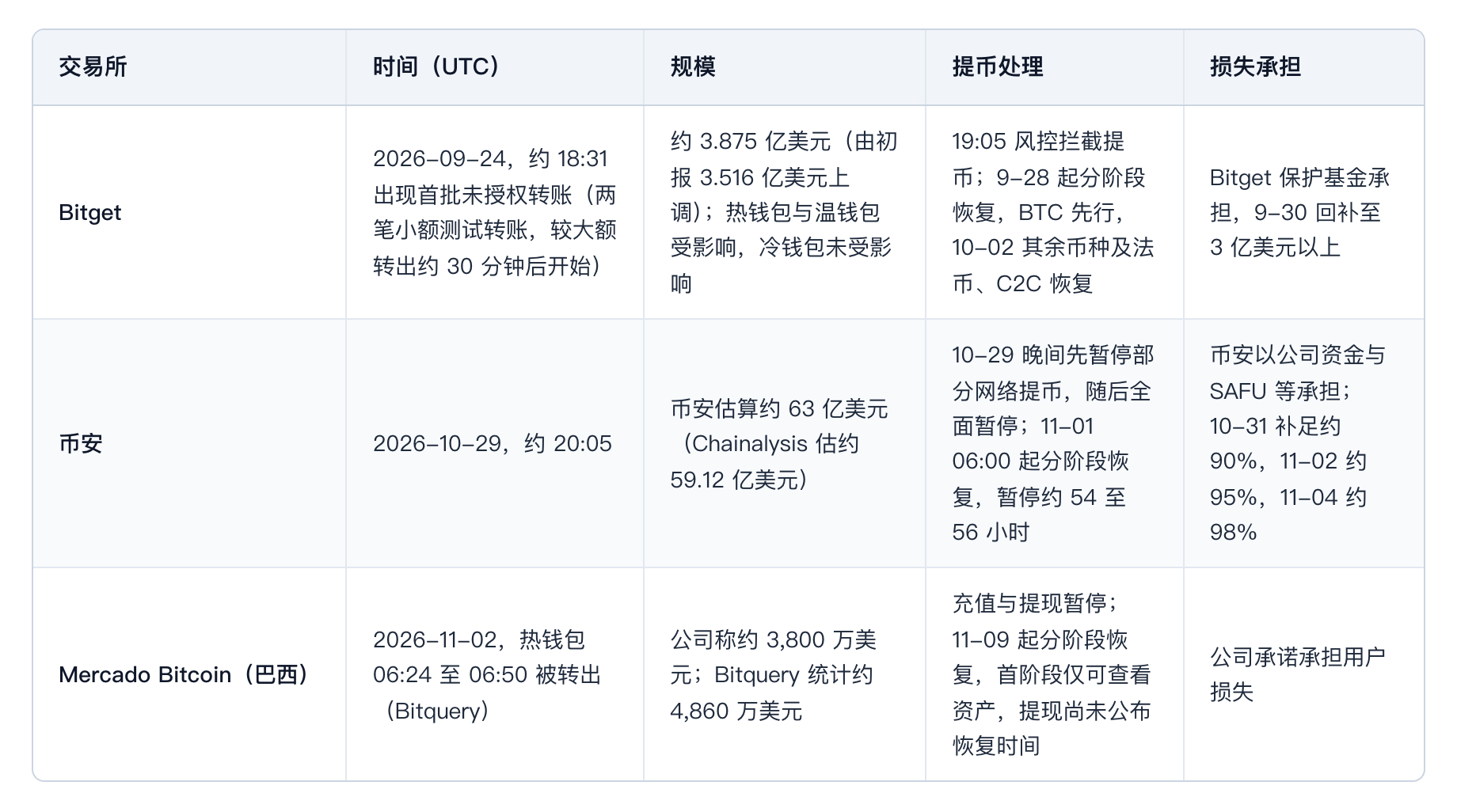
The amounts also require care. Binance estimated its loss at about $6.3 billion and set aside more than $6.34 billion in company funds, according to BigTime’s account of the platform’s disclosures. The figures cited in the research came from platforms, public reporting and third-party data, and were not independently audited.

Access can matter even when funds are covered
BigTime reported that Binance withdrawals were suspended for roughly 54–56 hours, while Bitget took about one week to restore withdrawals for all assets. During a suspension, an institution may be unable to move funds to meet margin needs elsewhere, redeem as planned or reposition holdings. A promise to reimburse losses does not remove that access risk.
Three checks for exchange exposure
Set a balance limit for each exchange. BigTime proposed measuring balances against an institution’s net assets and considering both how much it could afford to have inaccessible and for how long. A limit constrains exposure to one venue, but funds within that limit remain on the exchange.

Examine off-exchange settlement. These arrangements separate custody from trading: a third party holds assets while an exchange grants trading capacity against them, with gains and losses settled on an agreed schedule. They can reduce the assets held directly by an exchange, but they introduce reliance on the custodian and the arrangement’s legal terms. Gains awaiting settlement can still be claims against the exchange. BigTime found insufficient public information to establish how certain off-exchange arrangements operated during Binance’s withdrawal pause. Before relying on one, an institution would need to establish whether custodial assets remain movable during a pause and how settlement would work.
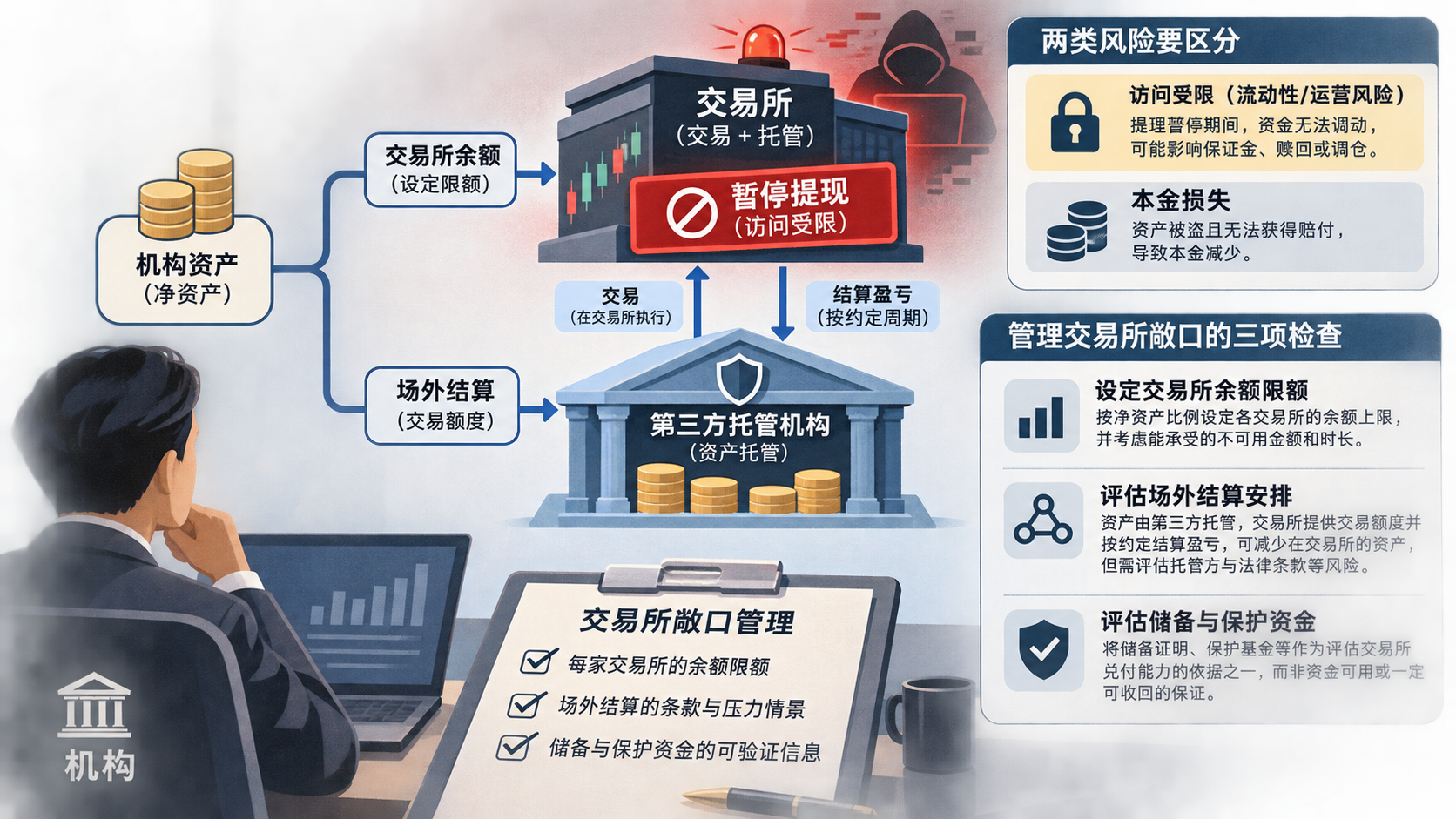
Treat reserves and protection funds as evidence to assess, not guarantees. BigTime cited Binance’s post-incident proof-of-reserves statement that user assets had at least 1:1 backing across ten covered assets. Such statements do not, by themselves, show every liability or establish how an exchange would perform under stress. BigTime also reported that Binance used part of its SAFU fund in the incident and pledged to replenish it without giving a timetable; the fund was smaller than Binance’s estimated loss, so the platform’s company funds were central to its coverage commitment.
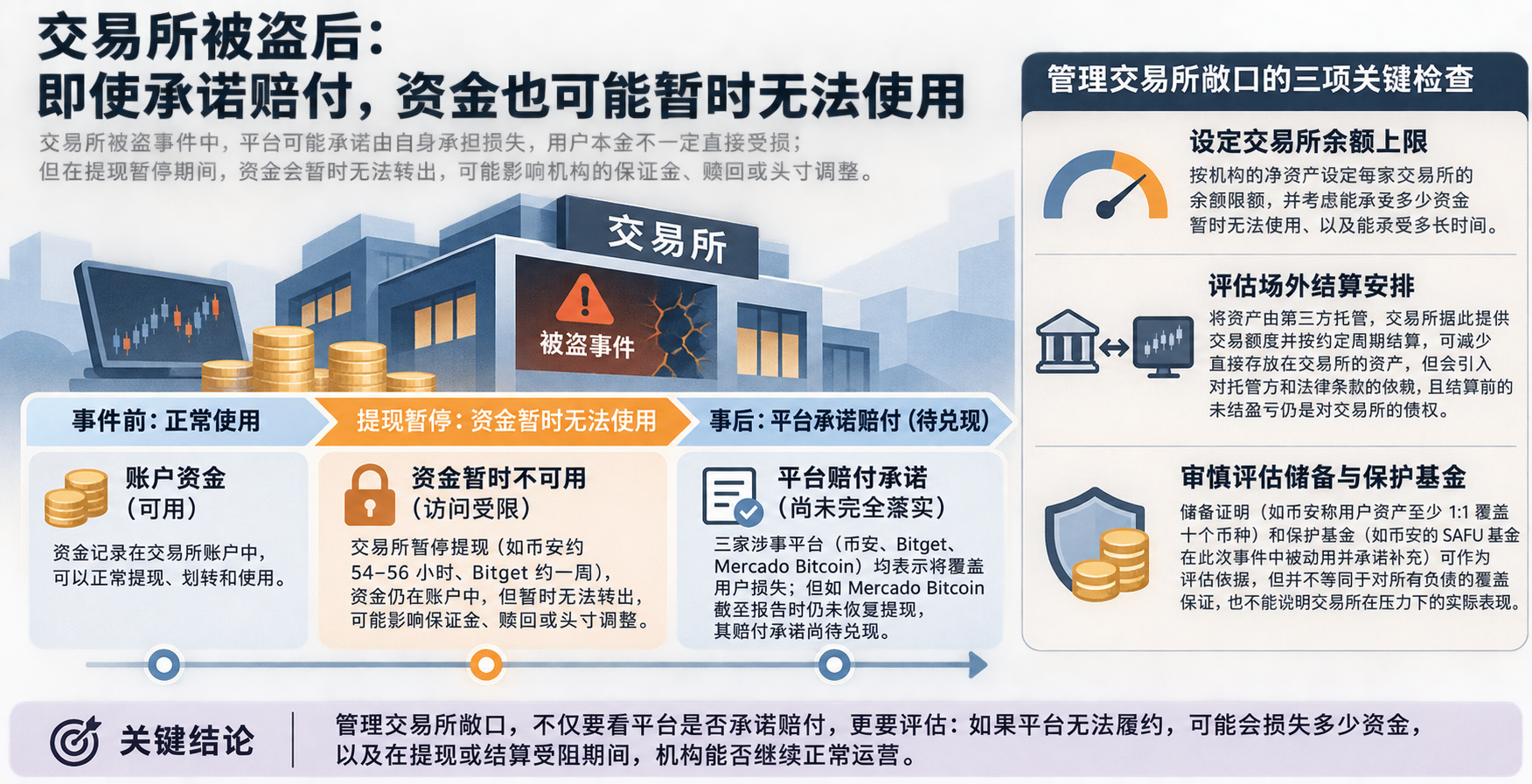
The practical question is not only whether a platform says it can repay customers. It is how much remains exposed if it cannot—and whether the institution can keep operating while withdrawals or settlement are disrupted. These checks reduce distinct risks; none establishes that funds will always be accessible or recoverable.