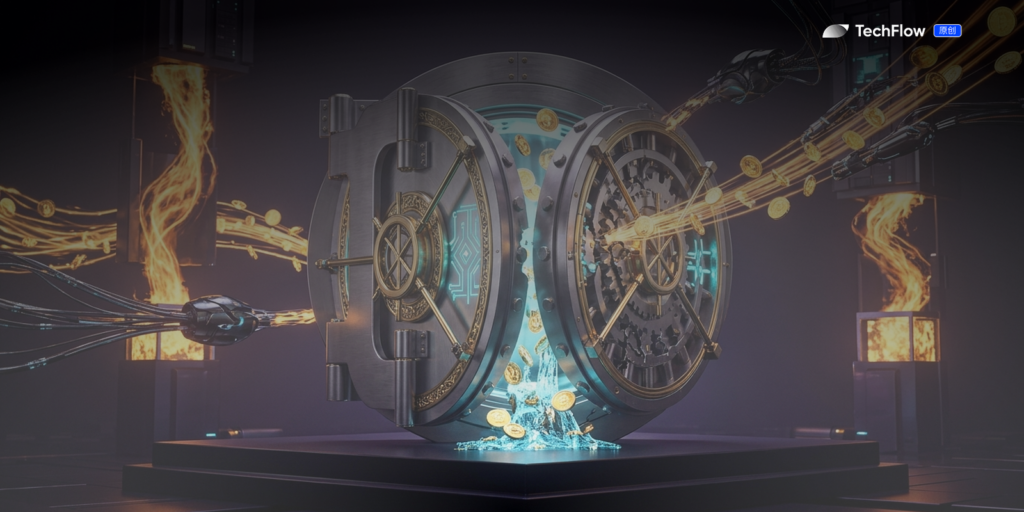
For anyone holding assets in a yield-bearing vault, the question is whether a share can be redeemed for more than the assets backing it. In a report published on November 19, 2026, Deep Tide TechFlow said an attacker exploited share-accounting logic in K3 Capital’s Ethereum sBOLD savings vault, draining approximately $3.4 million in liquidity through 97 transactions over about eight minutes.
sBOLD is a yield-bearing vault built around BOLD, the stablecoin from Liquity. Citing transaction analysis by Bitquery, the report said the attacker repeatedly deposited BOLD, introduced wrapped ether (WETH) that was not accounted for on the vault’s balance sheet, and exchanged it internally for BOLD. This inflated the calculated redemption value of sBOLD shares, allowing withdrawals against other depositors’ funds.
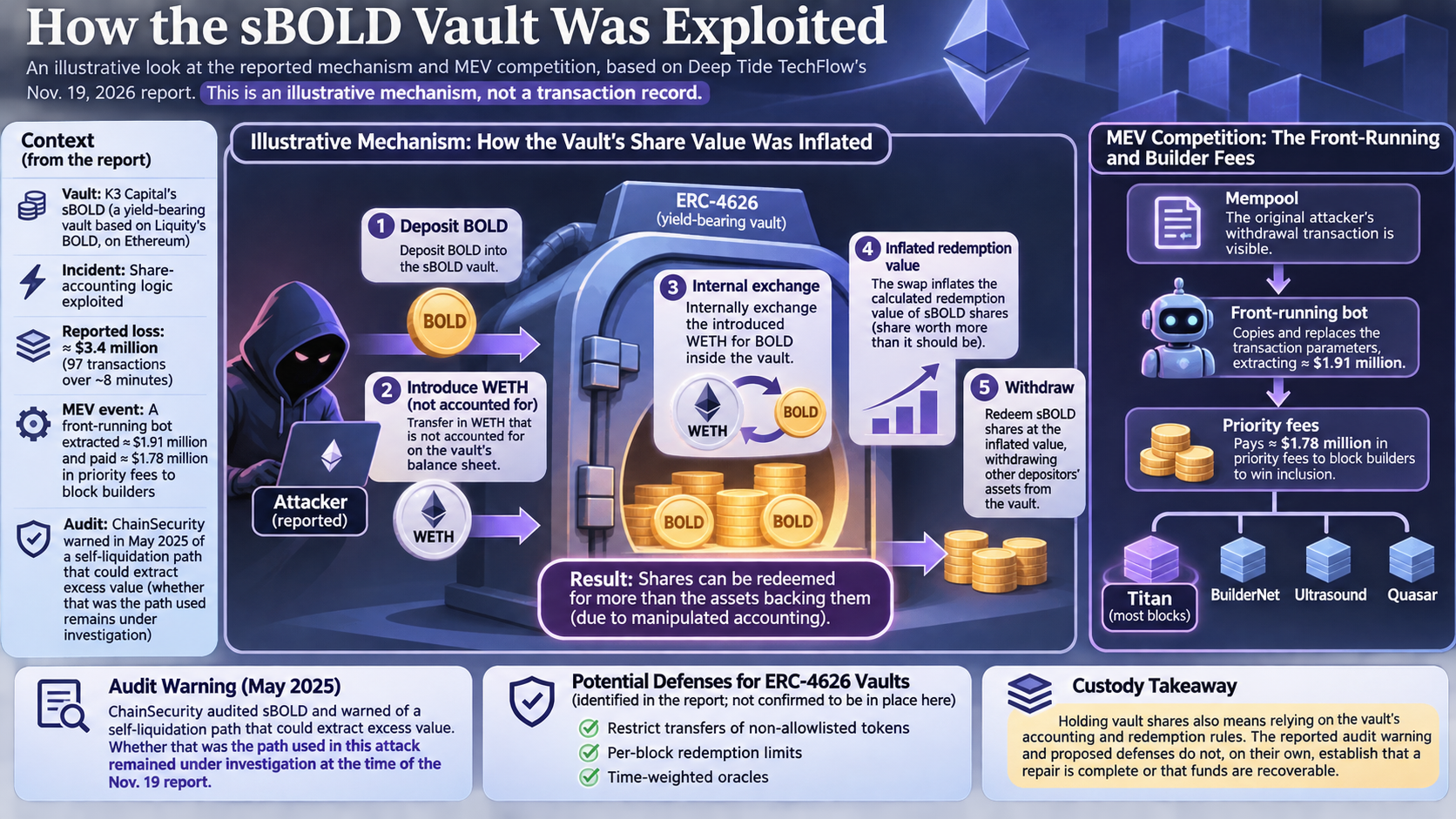
The reported loss was not all retained by the original attacker. According to Bitquery’s tracking, an automated front-running bot copied and replaced parameters from a withdrawal transaction visible in the mempool. It extracted approximately $1.91 million, then paid about $1.78 million in priority fees to block builders, leaving roughly $130,000 in net arbitrage proceeds. The report put the original attacker’s and initial funding wallet’s combined net proceeds at approximately $520,000. Researchers cited in the report cautioned that the builders’ $1.78 million was gross fee revenue: builders still had to pay for block proposals through MEV-Boost. Titan handled most blocks containing the front-running transactions; BuilderNet, Ultrasound and Quasar also participated in related block ordering.
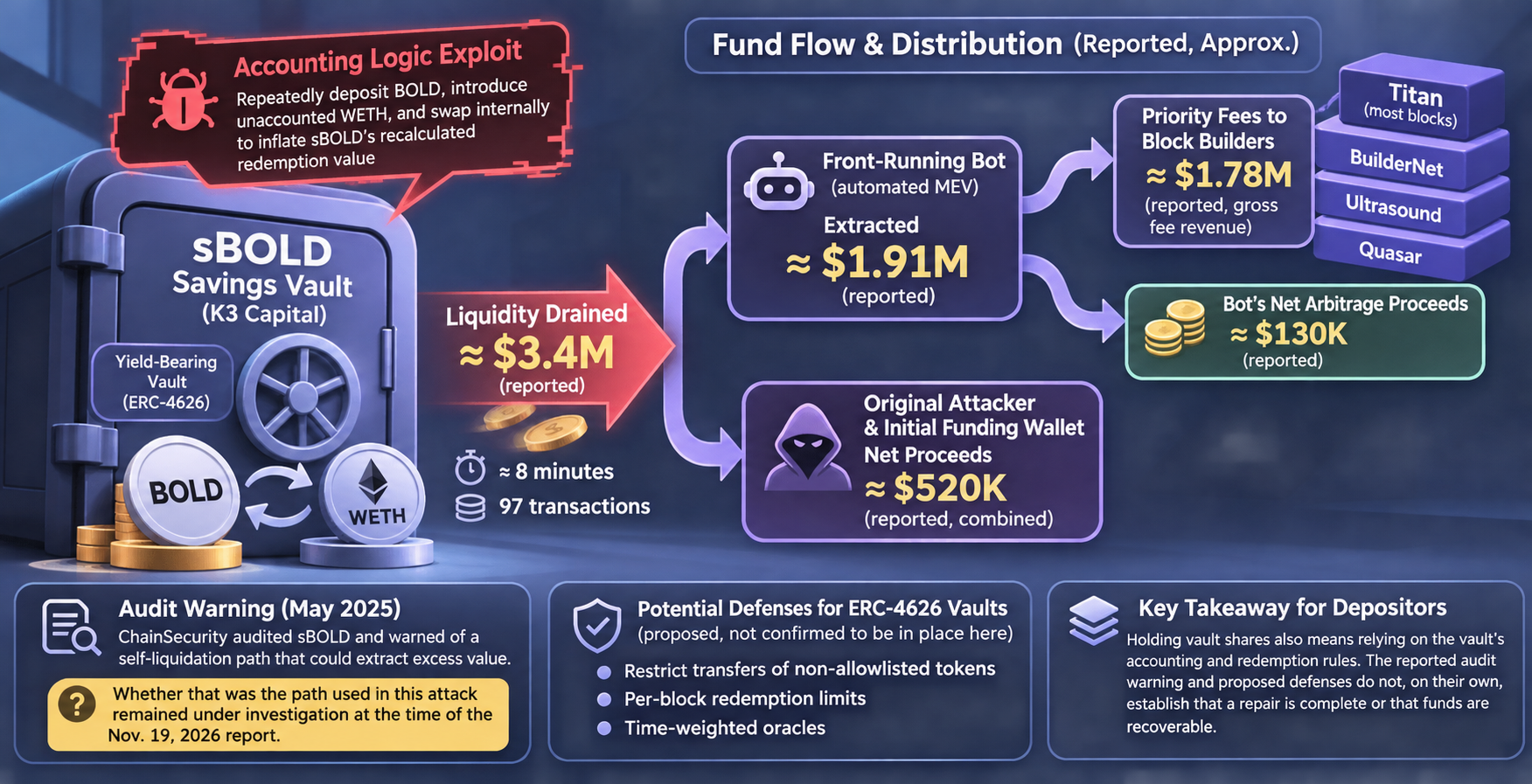
ChainSecurity audited sBOLD in May 2025 and warned of a self-liquidation path that could extract excess value. Whether that was the path used in this attack remained under investigation at the time of the November 19 report. The report said the team was monitoring cross-chain fund movements with tracking firms while assessing depositor losses and working on code repairs. It identified restricting transfers of non-allowlisted tokens, per-block redemption limits and time-weighted oracles as potential defenses for ERC-4626 vaults—not as fixes confirmed to be in place here.
For depositors, the custody lesson is a narrow one: holding vault shares also means relying on the vault’s accounting and redemption rules. The reported audit warning and proposed defenses do not, on their own, establish that a repair is complete or that funds are recoverable.