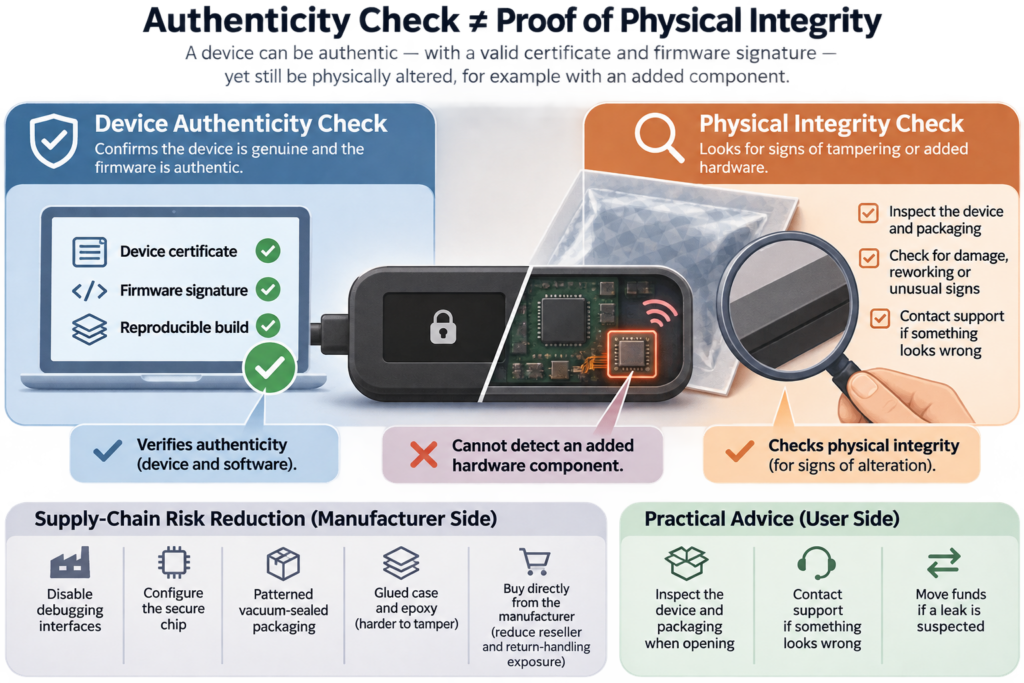
A device can pass an authenticity check without proving that nobody has altered its hardware. That distinction matters when you are checking a newly received signing device before trusting it with a wallet.
In an article published on November 24, 2026, BitBox discussed a reported case involving a Ledger device physically fitted with additional circuitry. The account described screen information and seed words being leaked through a cellular module. BitBox’s central point was that device authenticity and physical integrity require different checks.
BitBox described several measures intended to reduce supply-chain risk. During manufacturing, it disables debugging interfaces and configures the secure chip. It recommends buying directly from the manufacturer to reduce exposure to reseller and return-handling steps. Patterned vacuum-sealed packaging, a glued case and epoxy are intended to make tampering and repackaging more difficult.
Device certificates, firmware signatures and reproducible builds help verify authenticity, BitBox said, but they cannot detect an added component operating alongside the expected hardware. Its practical advice is to inspect the device and packaging when opening them, contact support if something looks wrong, and move funds if a leak is suspected. No single authenticity check should be treated as proof that a device has not been physically altered.