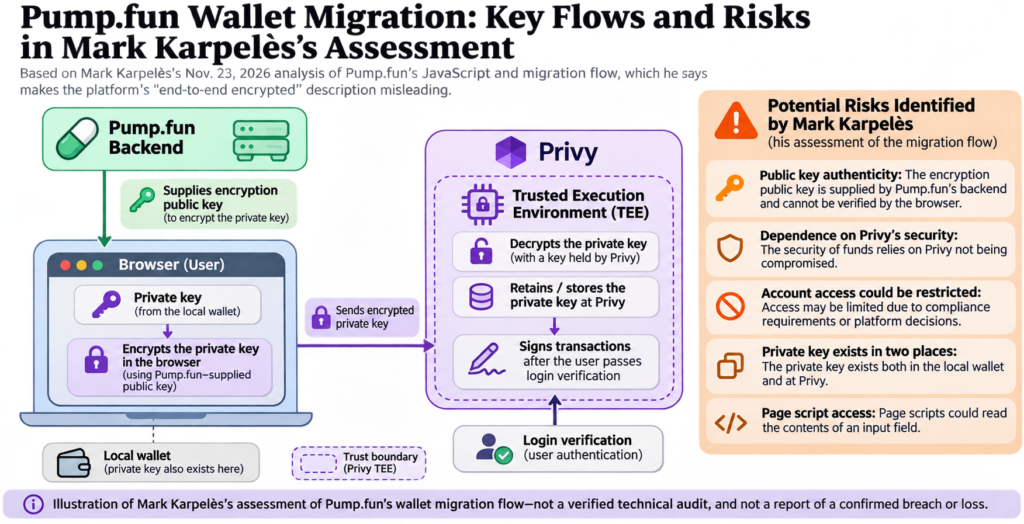
For someone moving a wallet, the key question is who can access the private key after migration. In a November 23, 2026 report, former Mt. Gox CEO Mark Karpelès said his analysis of JavaScript served by Pump.fun led him to consider its description of the process as “end-to-end encrypted” misleading.
According to Karpelès, the private key is encrypted in the browser, but Privy holds the key needed to decrypt it. He said Privy’s trusted execution environment (TEE) decrypts and retains the private key, then signs transactions after the user passes login verification.
Karpelès identified several potential risks: Pump.fun’s backend supplies the encryption public key without a way for the browser to verify its authenticity; the security of funds depends on Privy not being compromised; compliance or platform decisions could restrict account access; the private key exists in both the local wallet and at Privy; and page scripts could read the contents of an input field. These are his assessment of the migration flow, not reports of a confirmed breach or loss.