Holding Zcash in an iPhone wallet raises a privacy question that sits beside encryption of the memo itself: the lookup can still reveal which transaction the wallet is asking about.
As reported on November 23, 2026, a new grant application on the Zcash Community Forum seeks $25,000 to implement a private way of retrieving encrypted transaction memos for iPhone-based wallets. The report describes the proposal as a way to hide which transactions users have looked up, and treats that exposure as a potential deanonymization vector. It also notes that, given how Zcash positions itself, revealing external information could shorten the distance between a random transaction and a specific user.
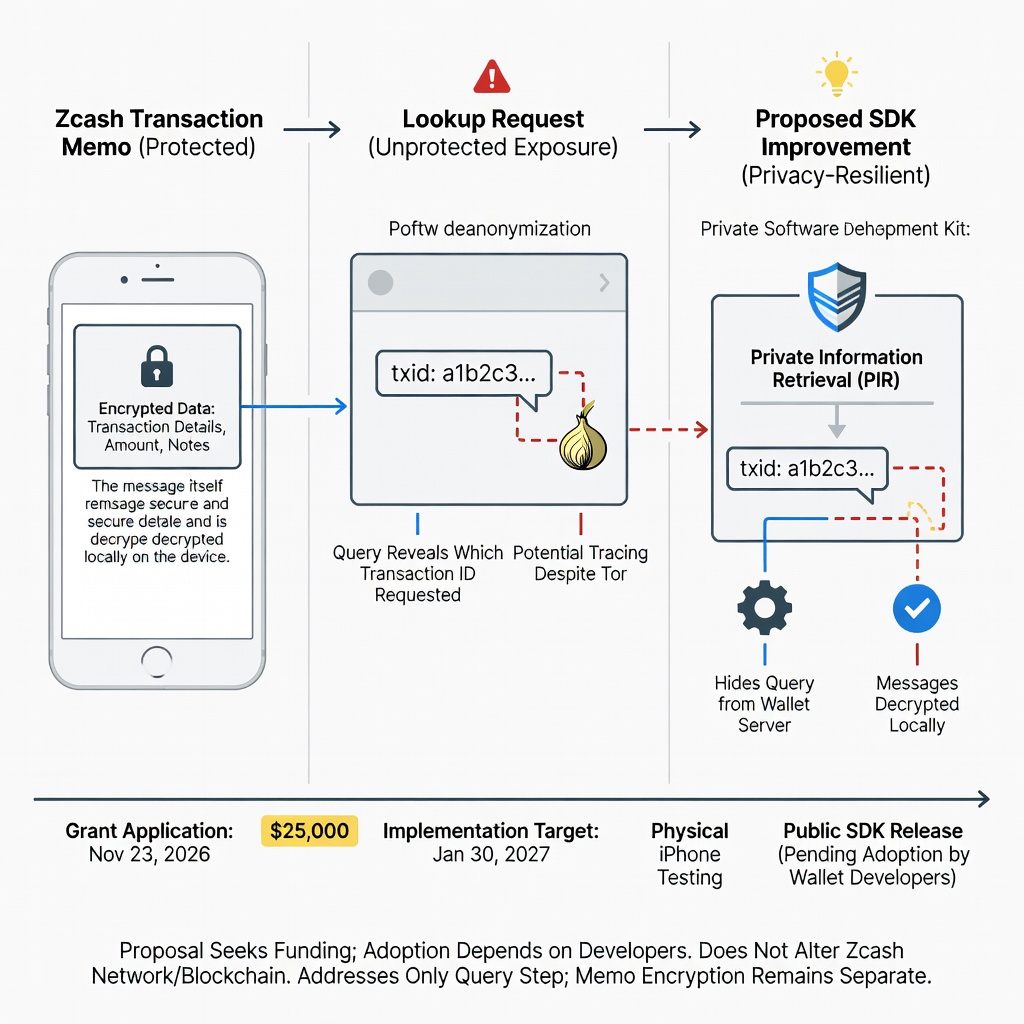
The proposal would not change the Zcash network or the blockchain. It is an improvement to a software development kit, intended to give developers tools that can make retrieval more privacy-resilient.
Zcash transactions contain encrypted data called memos. Wallets read those memos to receive information about a transaction. The message stays encrypted, as does the data that is retrieved, but the query itself is not protected, which can enable tracing. The report states that even when Tor is used, the transaction ID remains visible and can be read by anyone.
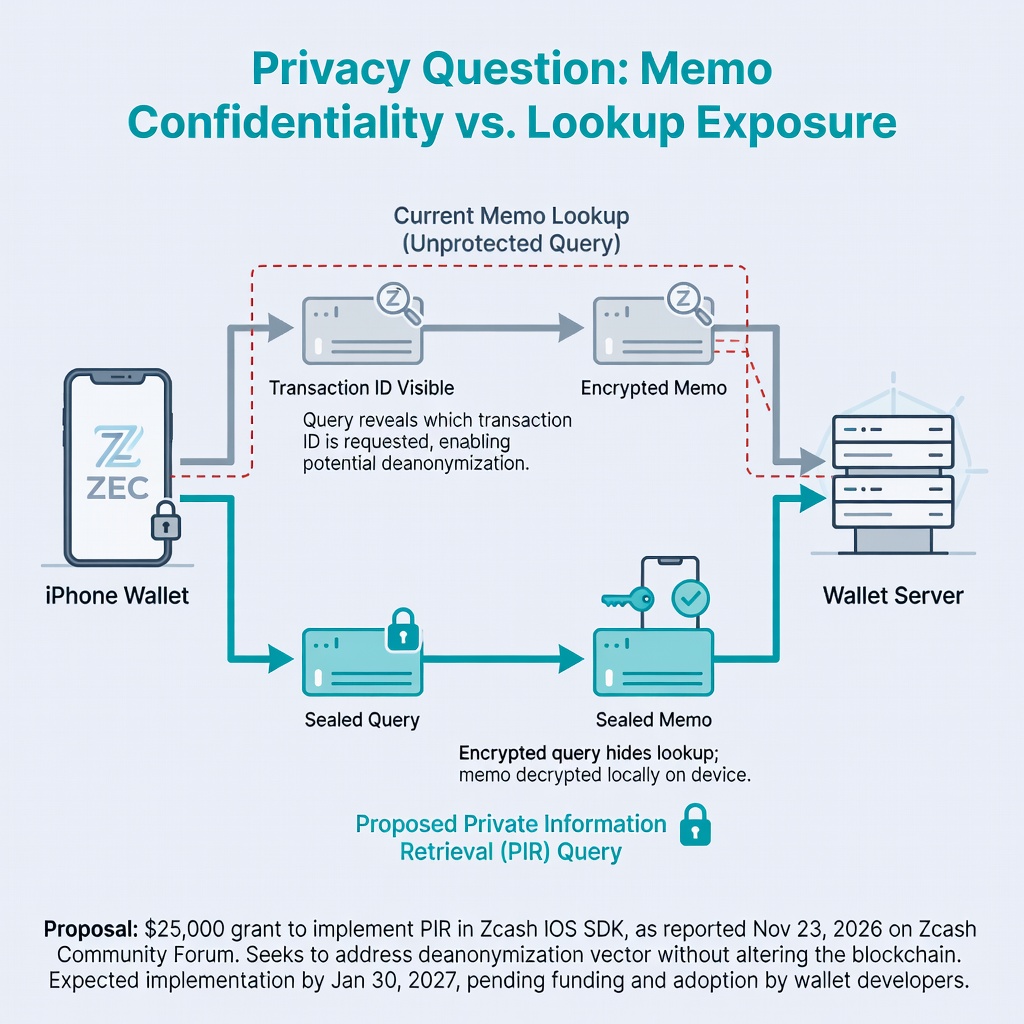
Integrating private information retrieval into the SDK is meant to make it easier to hide the query. Messages would be decrypted locally, and the wallet would verify the information returned.
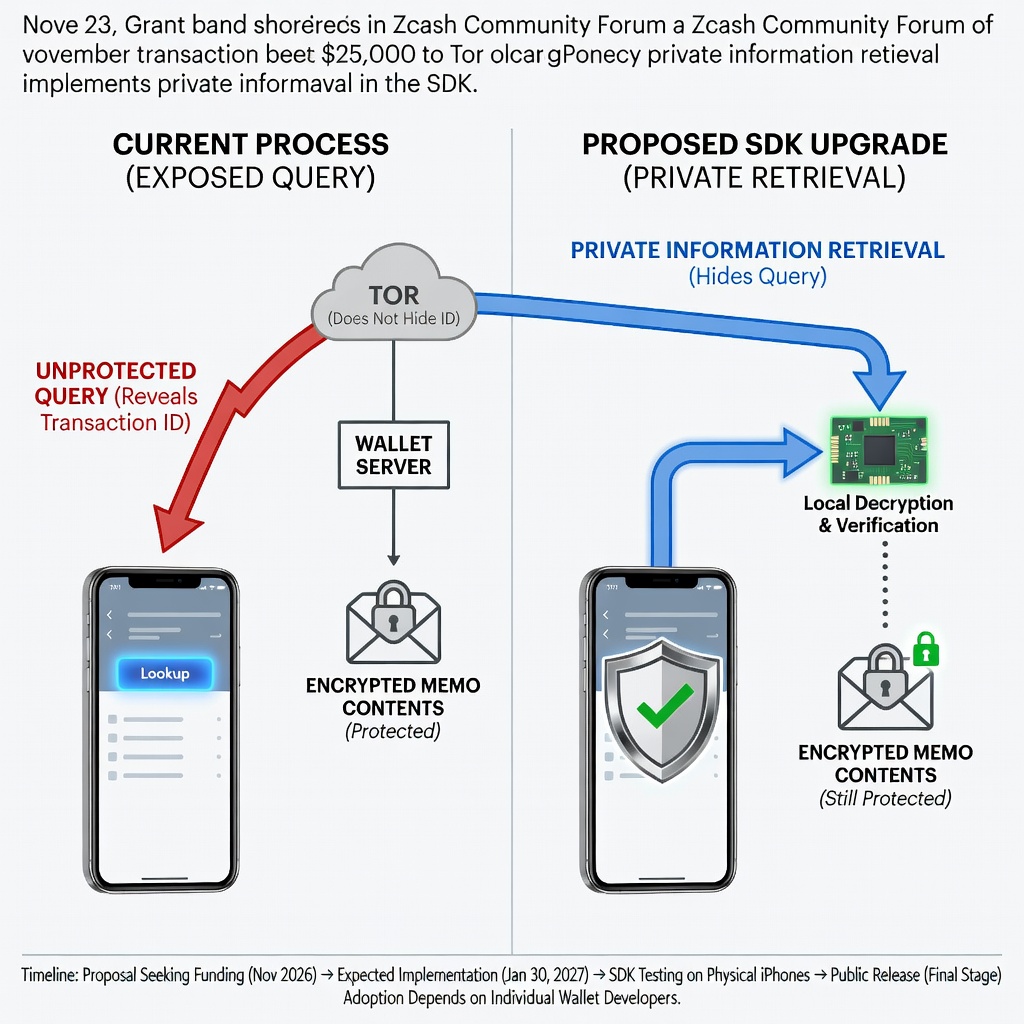
The report says early tests have shown promising results. In an iOS Simulator, the modified SDK retrieved a 512-byte memo through an encrypted query without revealing the transaction ID to the wallet server.
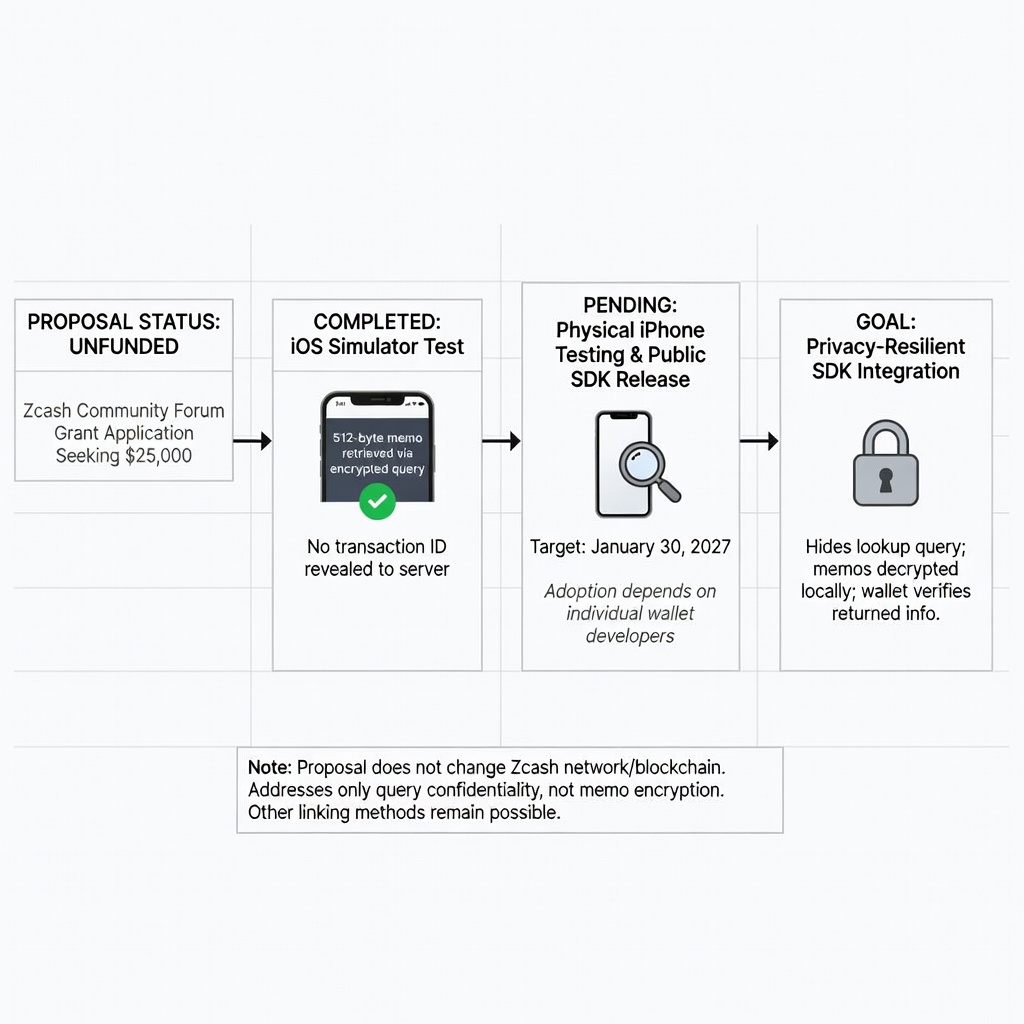
The developer expects implementation by January 30, 2027, with testing on physical iPhones and a public SDK release planned for the final stage. At the time of the report the proposal was still seeking funding, and whether the change reaches holders depends on individual wallet developers adopting it.
For someone keeping ZEC in a mobile wallet, the distinction is between confidentiality of the memo and confidentiality of the lookup. Encrypting the memo does not, by itself, hide which transaction ID was requested. If this SDK change is funded and adopted, it would address only that query step. It is a proposal, not an activated rule, and it would not remove other ways activity can be linked to a holder.