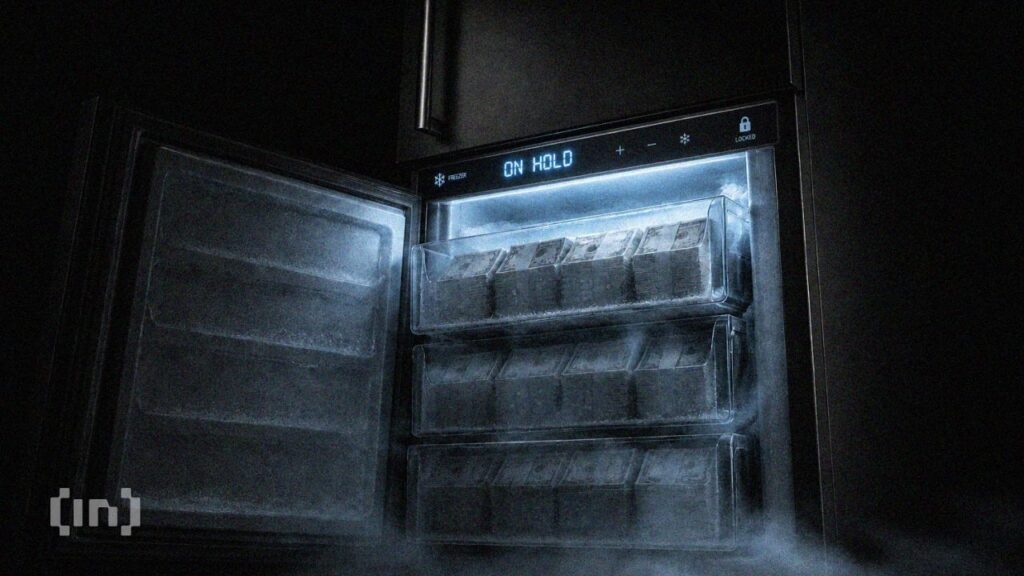
When Tether freezes stolen USDT, it stops the tokens from moving. It does not put them back in the owner’s hands. As of November 25, 2026, Singapore exchange Bittok had recovered none of the USDT that Tether froze after a June 2020 hack, according to a Bloomberg investigation. Bloomberg reported that Tether had sought fees of about 20% from some victims seeking to recover frozen funds.
What Tether told Bittok’s buyer
Hackers stole $50 million from Bittok, and Tether froze part of the stolen USDT. In emails reviewed by Bloomberg, a Tether lawyer told the company that bought Bittok that a 20% “reissuance fee” would apply to any funds returned. The fee was quoted on the amount Tether would return, not on the full $50 million loss.
To reissue USDT, Tether cancels the frozen tokens and creates replacements for the owner. People involved in other cases told Bloomberg that victims had received funds in installments, with similar fees. Crypto commentator Crypto Rover criticized the practice, arguing that victims should not have to give up a substantial share of their money to recover the rest.
How Tether explains its recovery terms
Tether says it has reissued $1.2 billion in USDT and that fees cover processing and legal costs. Its public recovery policy allows a fee of up to 10% for tokens sent to the wrong address. A separate team handles hacks; Bloomberg did not describe the roughly 20% fee as a published rate for all victims.
CEO Paolo Ardoino told Bloomberg that returning funds in installments protects Tether if someone else claims the same money. He said there was no law guiding that process. Tether says it holds more than $7 billion in frozen USDT.
The October 2026 Binance hack also illustrates the distinction between a freeze and a return. According to the report, North Korean hackers stole $6.3 billion from Binance. Tether froze more than $1.5 billion in USDT within 30 minutes, and Circle froze $1.1 billion in USDC. Binance later obtained a court order to reclaim part of its stolen funds.
Separately, US Senator Richard Blumenthal has accused Tether of doing too little to stop Iran’s use of USDT. Ardoino called the criticism a political attack.