
For anyone with a HARD Lend position, the immediate concern is how an application-level exploit affects existing loans and withdrawals. In an update reported on November 16, 2026, Kava said an attacker had taken approximately 53.9 million KAVA—valued at about $1.83 million—from the lending pool. Kava proposed a seven-day community vote to permanently end new HARD Lend borrowing and lending, with a staged process for existing positions if the proposal passes. The shutdown was a proposal, not an enacted rule, at the time of reporting.
How Kava described the exploit
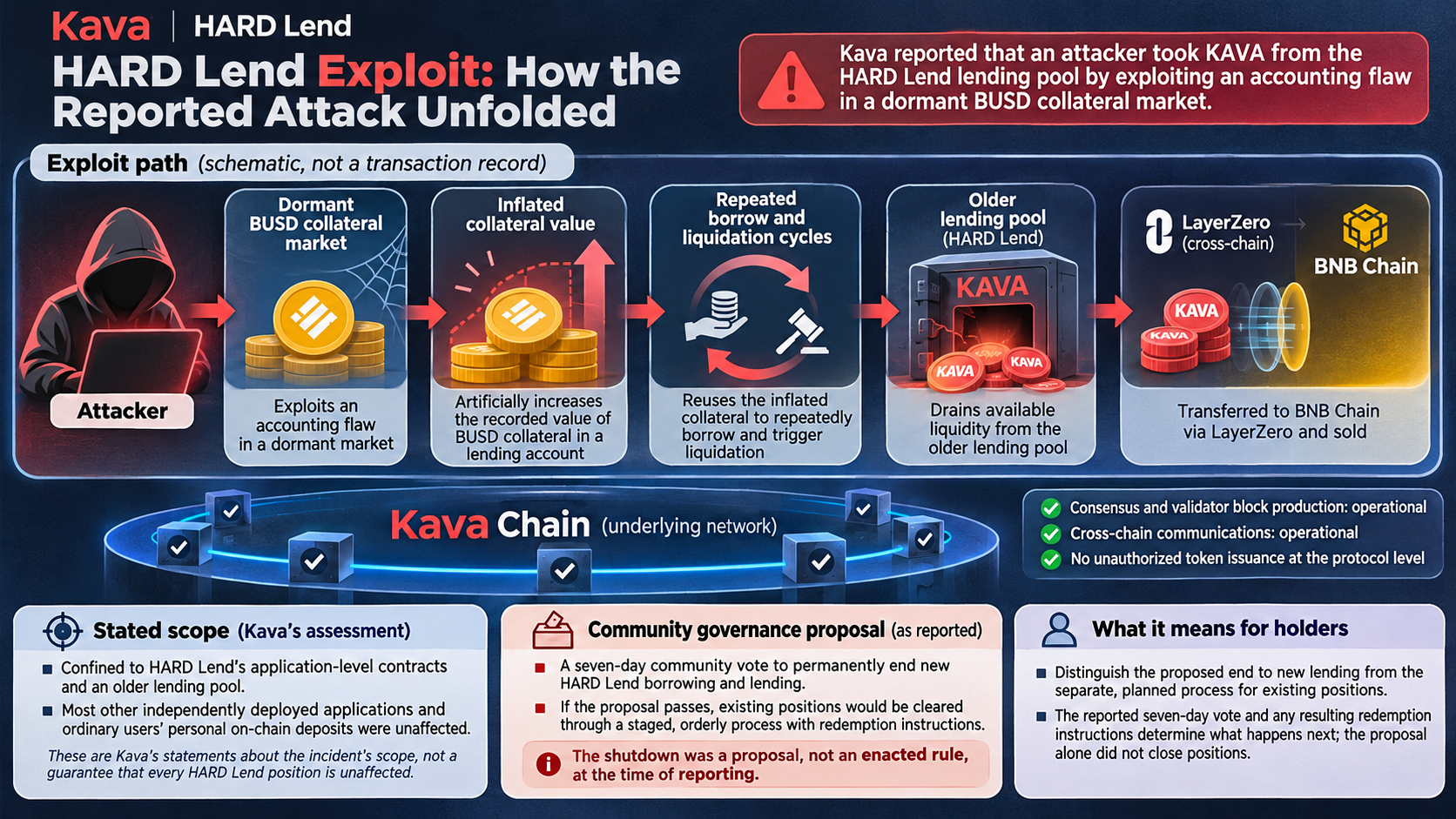
According to Kava’s security update, the attacker exploited an accounting flaw in a dormant BUSD collateral market. The flaw let the attacker inflate the collateral value recorded in a lending account, then repeat borrowing and liquidation cycles to drain available liquidity from the older pool.
The report said approximately 49.2 million of the KAVA taken—91.28% of the total—was transferred to BNB Chain through LayerZero and sold. Kava said it had contained the contract vulnerability and was working with security teams, trading platforms and law enforcement to trace the funds. As of November 16, it said some funds had been frozen at centralized exchanges and cross-chain bridge endpoints; it did not specify an amount recovered.
What the stated boundary means for holders
Kava said the incident was confined to HARD Lend’s application-level contracts and older lending pool. It said Kava Chain’s consensus, validator block production and cross-chain communications remained operational, with no unauthorized token issuance at the underlying protocol level. Kava also said most other independently deployed applications and ordinary users’ personal on-chain deposits were unaffected. Those statements describe Kava’s assessment of the incident’s scope, not a guarantee that every HARD Lend position is unaffected.
Holders with an existing HARD Lend position should distinguish the proposed end to new lending from the separate, planned process for clearing existing positions. The reported seven-day vote and any resulting redemption instructions determine what happens next; the proposal alone did not close positions.