If you already hold bitcoin, the custody question is where those coins sit and what you give up to move them: an exchange account, a wallet that stays online, or a structure in which someone else holds the coins. A report published on November 10, 2026, describes one path some larger holders have used, and it treats security—not the bitcoin price—as the main reason.
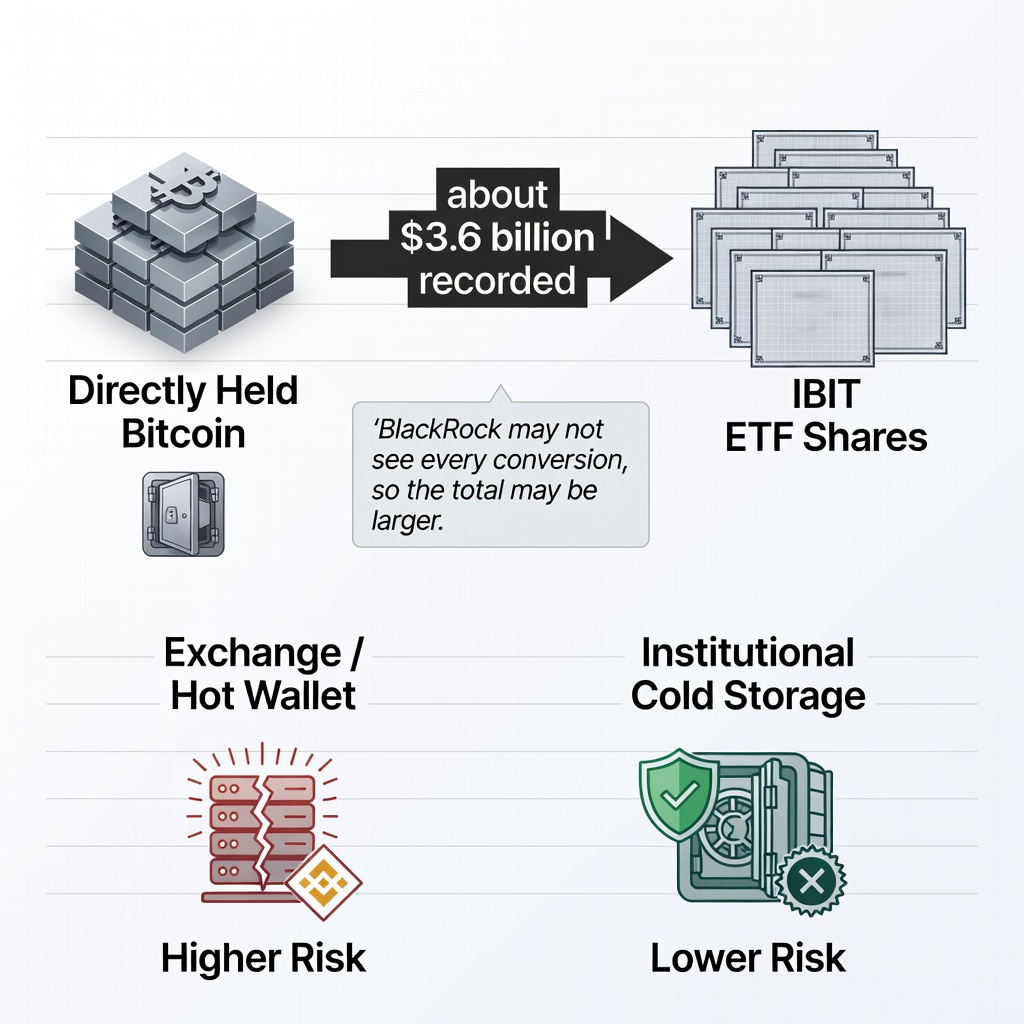
ChainCatcher, citing Barron’s, reported remarks by Robbie Mitchnick, head of BlackRock’s digital-asset business. He said that since regulators approved in-kind creation and redemption of crypto assets the previous year, BlackRock had recorded about $3.6 billion in in-kind conversions of directly held bitcoin into shares of its spot bitcoin ETF, IBIT. That figure is what the firm has logged. BlackRock does not handle every transaction itself and may not see every conversion, so the actual amount may be larger.
BlackRock also offers in-kind conversions for the iShares Ethereum Trust ETF and the iShares Staked Ethereum Trust ETF. The report said those amounts were far smaller than the IBIT conversions.
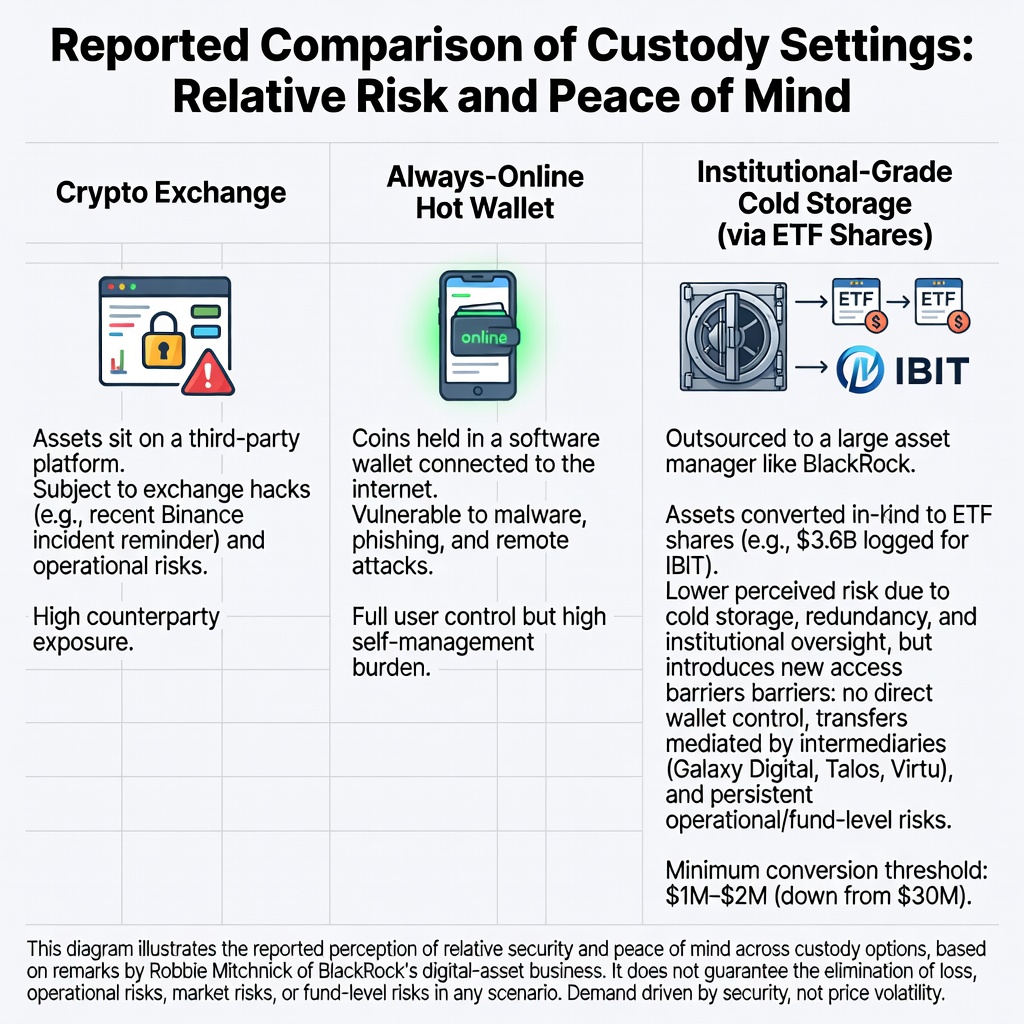
Mitchnick said demand was still rising and that this was the highest level of interest the company had seen. He said that interest did not change with moves in the bitcoin price. The single largest motive he named was security and peace of mind. Outsourcing custody to an institutional-grade cold-storage model was, in his account, more attractive to holders. Shares of an ETF managed by a large asset manager are generally viewed as lower risk than leaving assets on a crypto exchange or in a hot wallet that remains online.
That is a reported view of relative risk, not a claim that ETF shares remove loss. Moving from coins you control into fund shares changes access: you no longer hold the underlying bitcoin in your own wallet, and transfers run through the fund and the firms that arrange the conversion. Confidentiality and redundancy change with that handoff, because more parties sit between you and the coins. Nothing in the report says this setup eliminates operational, market, or fund-level risk.
Mitchnick also pointed to a then-recent hack of Binance as another reminder of exchange risk. The report gave no loss figure for that incident. It said large bitcoin holders had already understood these risks.
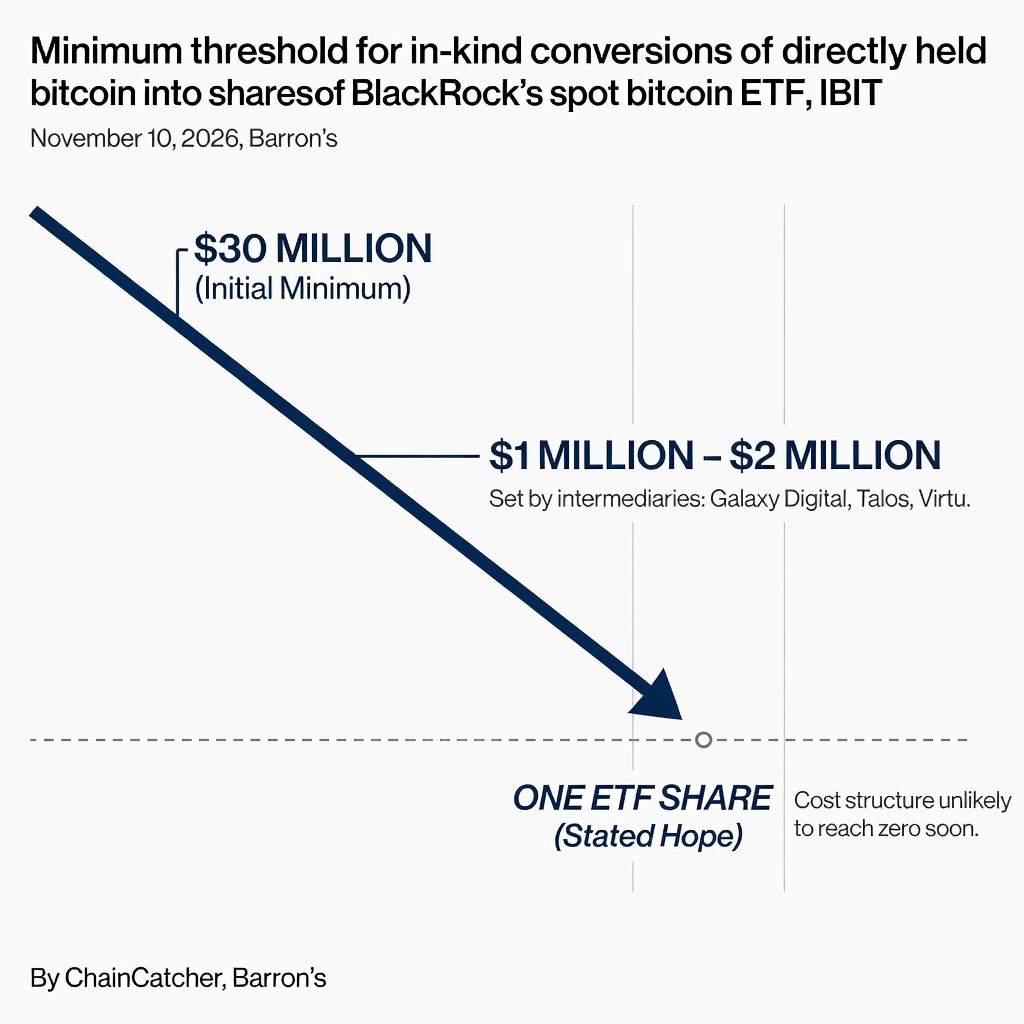
The minimum for an in-kind conversion had fallen from an initial level of about $30 million to about $1 million to $2 million. Galaxy Digital, Talos, and Virtu, the intermediaries that facilitate the trades, set that threshold. Mitchnick said he hoped it could eventually fall to a single ETF share, while adding that the cost structure was unlikely to fall to zero in the near term.
Original article: ChainCatcher, November 10, 2026, 15:27 UTC+8, citing Barron’s.