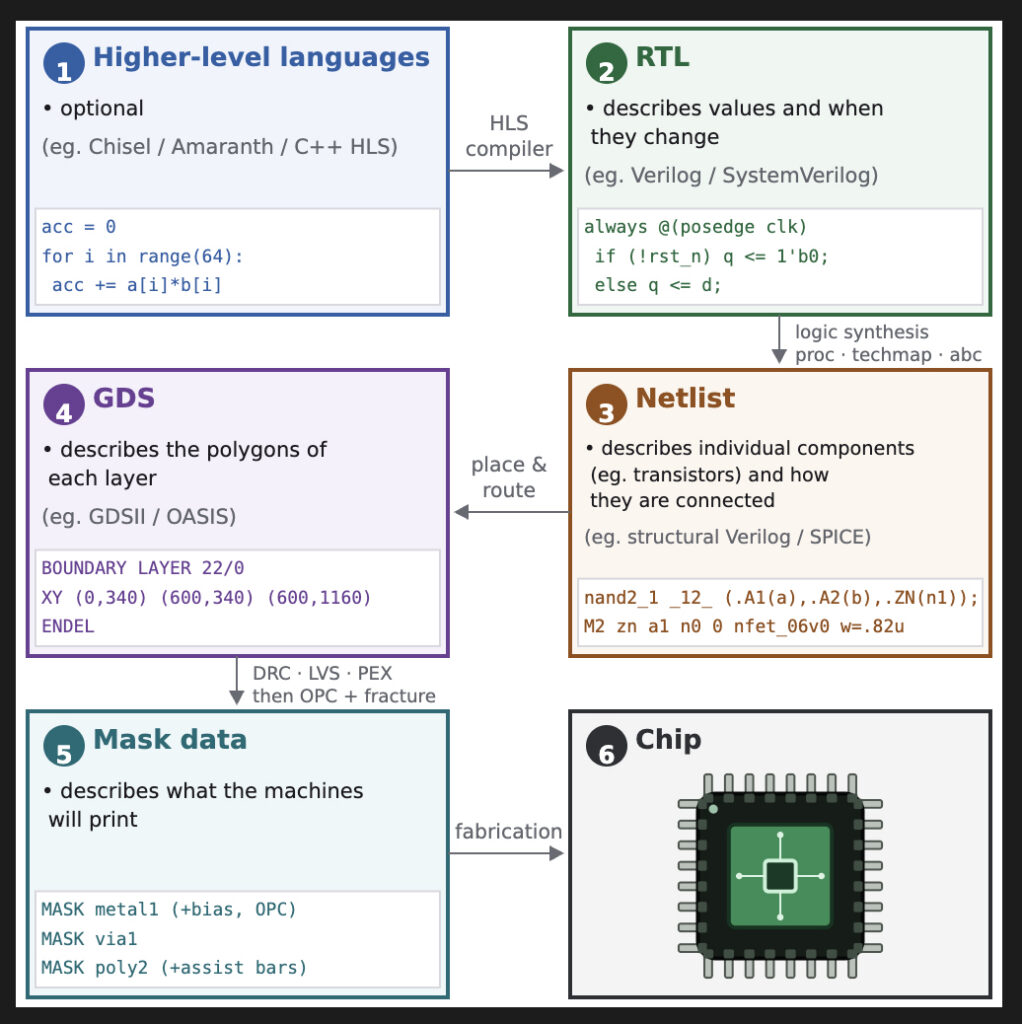
A wallet holder can have the software that handles a private key independently audited and still know little about the chip running it. In a November 26, 2026 essay on open-source chip design, Ethereum co-founder Vitalik Buterin summed up that gap in a phrase: “Not your silicon, not your keys.”
Buterin’s point is that a software audit cannot rule out a hidden flaw or malicious modification in the hardware underneath. Publishing chip specifications would give independent researchers a design to examine, developers an architecture they could modify and manufacturers a common specification they could compete to produce. That would open the design to scrutiny, not guarantee the integrity of every chip made from it.
Where the trade-off matters. Advanced chip manufacturing remains expensive and tightly controlled, and open designs lag the most sophisticated commercial processors in performance. Buterin argues that some workloads can tolerate that cost: “Secure hardware may be 10x less efficient or more” and still meet many computing needs.
Hardware wallets, Ethereum validators and zero-knowledge proof systems all depend on computing components that users must trust. For those applications, being able to inspect a chip’s design could matter more than matching the fastest processor. Buterin sees potential beyond crypto, too, including in personal computers, servers and connected devices.
The essay makes a case for opening hardware to independent participation. It does not announce an Ethereum chip or a plan to compete with Nvidia’s GPUs.