
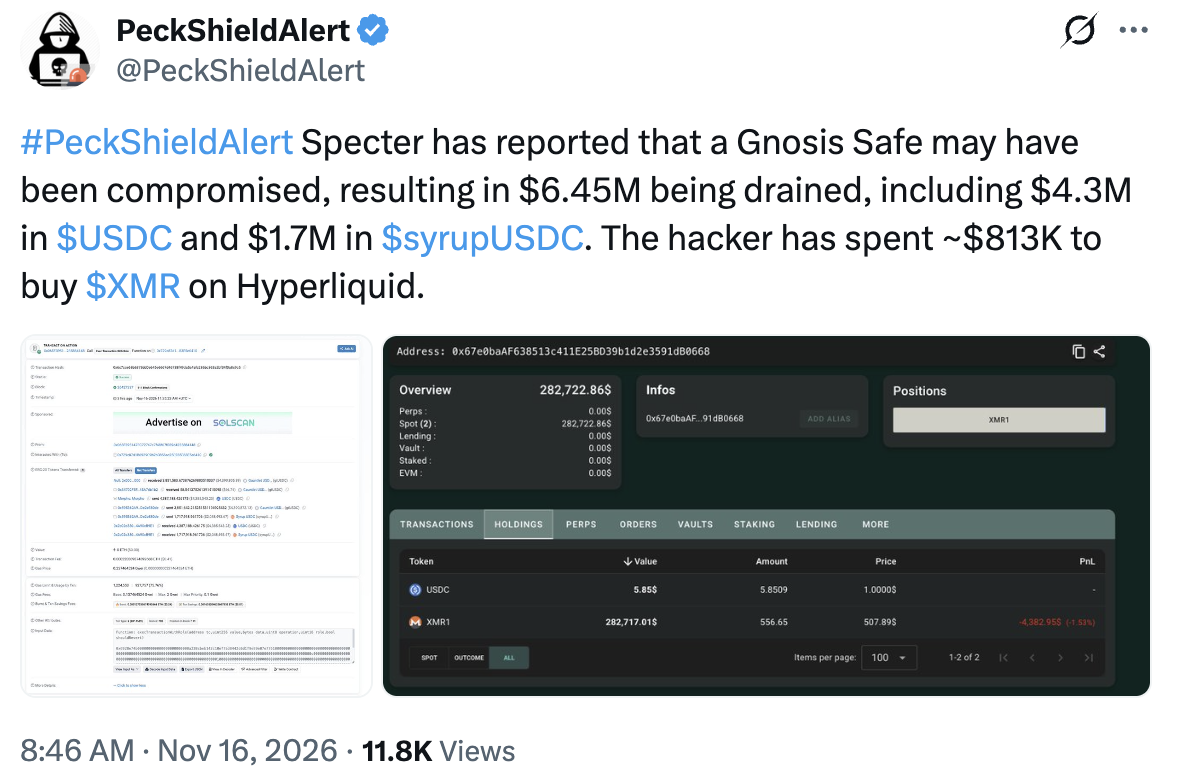
A wallet can lose funds even when a permissions module works as configured. In reporting published on November 17, 2026, Cointelegraph described a suspected theft of about $6.45 million from a Safe wallet the previous day. The wallet owner had not been identified.
Ethereum records reviewed by Cointelegraph showed approximately 4.39 million USDC and 1.72 million syrupUSDC tokens leaving the wallet in a single transaction. Blockchain security firm PeckShield reported the suspected theft, citing onchain investigator Specter.
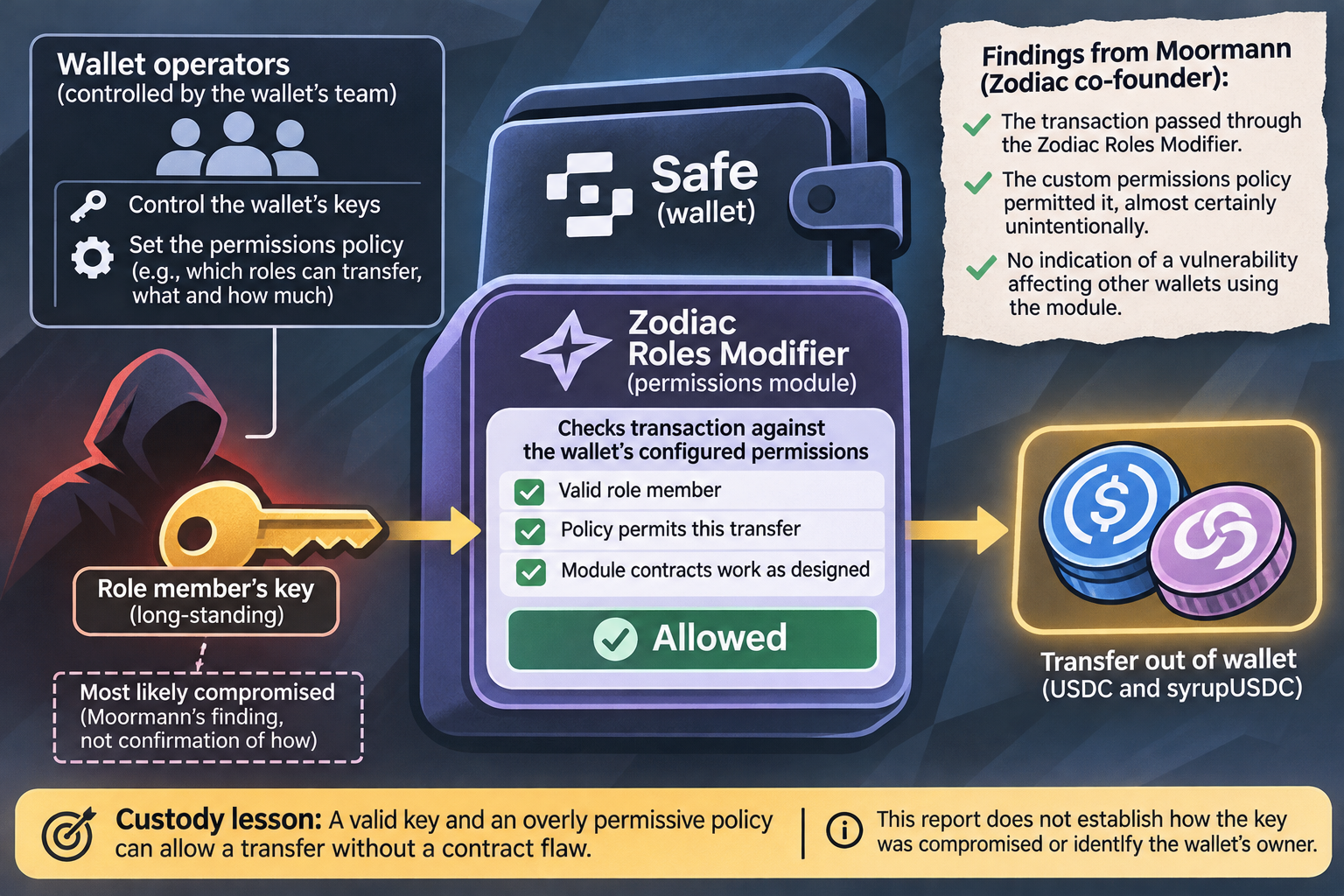
Johannes Moormann, a co-founder of Zodiac, said his team confirmed that the transaction passed through the wallet’s Zodiac Roles Modifier. The module checked it against the wallet’s configured permissions and allowed it. Moormann said the transaction came from a long-standing role member’s key that was most likely compromised, and that the wallet’s custom policy permitted the transfer almost certainly unintentionally. He said the module’s contracts worked correctly and saw no indication of a vulnerability affecting other wallets using it. These are Moormann’s findings, not confirmation of how the key was obtained.
Moormann said the wallet’s operators controlled its keys and permissions; Zodiac had neither access to them nor a role in configuring them. He also said Zodiac had not been in contact with the affected team. Cointelegraph had not received responses from Safe or Gnosis Guild by publication.
PeckShield said the attacker used approximately $813,000 to buy Monero-linked tokens on Hyperliquid. Separately, blockchain analytics firm Bitquery traced funds through multiple addresses to Hyperliquid, where it said five accounts bought approximately $1 million in XMR1 tokens. Bitquery noted similarities to fund movements after a separate Lighter incident on November 16, including a 160 ETH transfer and XMR1 purchases, but found no transfers linking the two wallet groups. It could not establish whether the same actor was involved.
The custody lesson is a narrow one: a valid key and an overly permissive policy can allow a transfer without a contract flaw. This report does not establish how the key was compromised or identify the wallet’s owner.