A recovery seed can restore access to a Bitcoin wallet, but it may not restore everything a future signing system needs to know. In reporting published on November 13, 2026, at 04:36 UTC+8, Trezor CTO Tomáš Sušánka described a potential difficulty with SHRINCS, a proposed post-quantum signature scheme: wallets using its stateful option would have to track which one-time signatures had already been used.
SHRINCS, proposed by Blockstream Research Director Jonas Nick and cryptographer Mikhail Kudinov, would offer two ways to sign. Its stateless signatures can be reused safely, but are larger and could affect fees and signing efficiency. Its stateful signatures are smaller—about 10 times smaller, according to Sušánka—but reusing a one-time signing key beyond its budget could reveal enough information for someone else to forge a signature and steal funds.
That creates a recovery and device-sync challenge. Sušánka gave the example of two Trezor devices restored from the same recovery seed: the seed alone does not provide a way to share their signing state. He said developers, rather than users, should be responsible for making state tracking secure. Trezor is considering making stateless signatures the default and placing the stateful option in advanced settings. These are options under consideration, not a change to Bitcoin’s current rules.
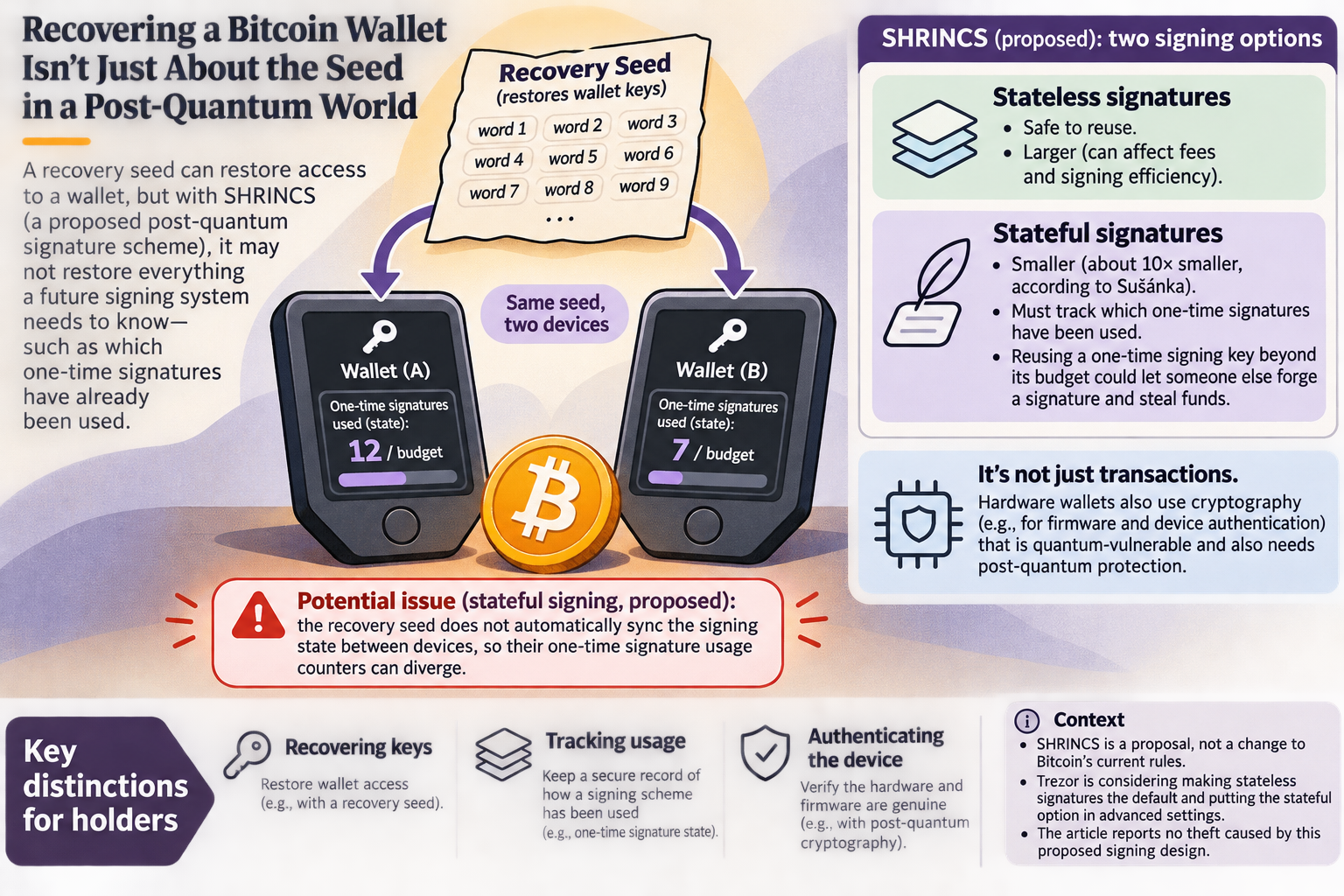
A Bitcoin upgrade would not be the whole answer. Sušánka said hardware wallets also use quantum-vulnerable cryptography for functions such as firmware and device authentication. Trezor says its Safe 7 supports post-quantum cryptography for wallet authentication, but transactions made with it would become quantum-secure only if Bitcoin itself adopted post-quantum security. Sušánka also cautioned that giving potentially millions of users a way to migrate would take time.
For holders, the practical distinction is between recovering keys, tracking how a signing scheme has been used, and authenticating the device itself. SHRINCS remains a proposal; the article reports no theft caused by this proposed signing design.
Source: decrypt.co (originally published 2026-11-13 04:36 UTC+8)